
Womb Massage as a Deeper Return to the Self

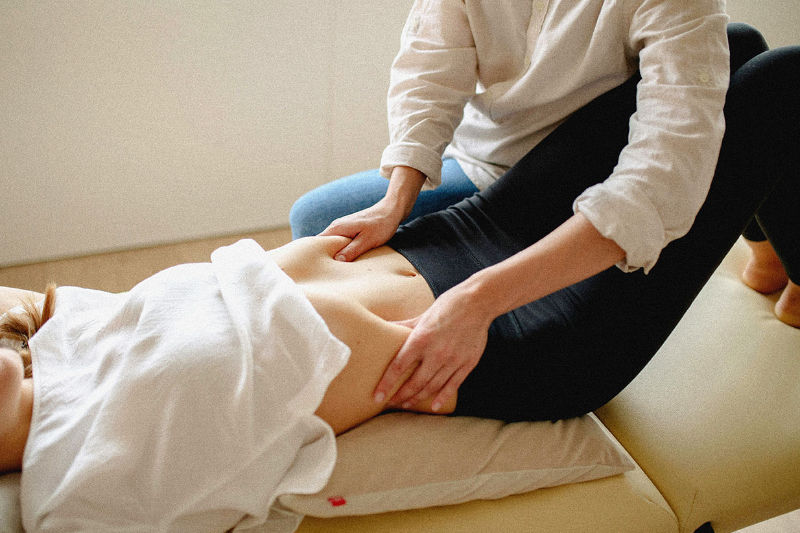
The lower abdomen is a body region that many people perceive only faintly in daily life. From a neurophysiological perspective, this often occurs because interoceptive sensitivity — the ability to perceive internal bodily signals — can decrease under chronic stress, emotional tension, or habitual over-reliance on cognitive control.
The womb, understood here as the uterine and pelvic region, becomes less consciously felt not because it is inactive, but because its signals are down-regulated in the brain’s body-mapping networks.
This region is, however, densely innervated, richly vascularized, and structurally connected to the diaphragm, abdominal wall, and pelvic floor through continuous fascial networks. Anatomical research shows that persistent tension in these connective chains can influence posture, breathing patterns, and global muscle tone. Over time, such tension may contribute to sensations of rigidity, heaviness, or bodily disconnection.
Historically, the womb has been viewed almost exclusively through reproductive or pathological frameworks. This has produced long traditions of medical and cultural intervention in which the subjective experience of the person was marginalized.
Bodymind Happy Womb Massage takes a different approach: it does not aim to correct a function, but to support renewed perceptual and neurophysiological access to the pelvic region.
The practice uses slow, steady, and fully consensual touch. This kind of contact is known to promote activation of the parasympathetic nervous system, which governs rest, digestion, and recovery.
Research shows that this activation can be measured through increased heart-rate variability, a recognized indicator of stress regulation. In simple terms: when the body perceives safety in touch, it more easily enters a physiological state of calm.
Why this experience matters
The relevance of this practice is not medical treatment, but its capacity to influence measurable processes of nervous-system regulation and body perception. Studies in body-oriented psychotherapy show that experiences of safe contact can improve somatosensory integration — the way the brain builds its internal body map — thereby strengthening the sense of inhabiting one’s body more stably.
Many people report deeper breathing, reduced abdominal tension, and a clearer sense of inner centering. Physiologically, these effects correspond to decreased sympathetic activation (stress response) and increased parasympathetic activity (recovery mode). The experience is therefore not only subjective but consistent with observable autonomic nervous-system modulation.
In performance-driven cultures, the practice creates a context without required outcomes. This allows the nervous system to temporarily exit predictive control mode and enter spontaneous self-regulation processes.
What happens during the practice
Contact is established through continuous consent. This is relevant neurobiologically: perceived control reduces activation of brain networks associated with threat and enhances safety responses. The person can interrupt or modulate touch at any moment, maintaining active participation in regulating the experience.
The touch does not aim to directly stimulate the uterus, but the surrounding abdominal and pelvic tissues. Ultrasound studies indicate that gentle mobilization of these tissues can temporarily increase blood flow in the uterine region. This supports local oxygenation and release of muscular and fascial tension.
At the same time, slow tactile stimulation activates sensory nerve fibers that send calming signals to the brainstem, contributing to a global reduction of defensive bodily tone.
Why the belly is a gateway
Anatomically, the respiratory diaphragm, abdominal muscles, pelvic floor, and uterine structures form a functional unit linked by continuous fascial chains. Changes in mobility or tone in one area can therefore influence the entire system.
The abdomen also contains a high density of interoceptive receptors involved in sensing internal bodily states. Reactivating sensitivity in this region can enhance overall bodily awareness. Research shows that safe tactile experiences can reorganize implicit body representation — the brain’s unconscious body image.
For this reason, work on the belly does not only produce local effects, but may influence posture, breathing, emotional self-regulation, and the sense of inner centering.
Symbols, gender, and relational context
The relational quality of touch directly shapes neurophysiological responses. Perceived safety, respect, and role clarity reduce activation of social-vigilance networks in the brain. This explains why therapeutic relationship quality and explicit consent are central to the effectiveness of the practice.
Symbolic aspects related to the gender of the practitioner can influence expectations, body memory, and trust. These factors, in turn, modulate autonomic nervous-system regulation during the experience.
The grammar of touch and consent
From a scientific perspective, continuous consent is not only an ethical principle but also a regulatory factor for the nervous system. Knowing that touch can be stopped at any moment maintains a sense of control, reducing bodily alarm responses.
Touch depth is adjusted according to tissue response and breathing patterns. This keeps the experience within the person’s physiological window of tolerance, avoiding sensory overload or defensive reactions.
The semantics of deep touch
Bodymind Happy Womb Massage does not claim medical therapeutic outcomes. Current research indicates, however, that slow, conscious, consensual touch can produce measurable effects on:
Regulation of the autonomic nervous-system
Integration of body perception
Reduction of physiological stress markers
Its primary effectiveness remains experiential, but it is supported by coherent and observable physiological mechanisms.
The implicit message to the nervous system is: the body is safe. From this, relaxation, deeper breathing, and improved sense of embodiment can emerge spontaneously.
Scientific notes
Parasympathetic activation and increased heart-rate variability in response to slow, safe touchLicciardone et al., 2010
Temporary increase of uterine blood flow after gentle mobilization of abdominal tissuesKing et al., 2007
Fascial continuity between diaphragm, abdomen, pelvic floor, and uterine regionMyers, 2014
Reorganization of implicit body image through experiences of safe contactPrice, 2005
Slow manual stimulation and improved interstitial fluid movementFoldi & Foldi, 2006
Myofascial continuity between diaphragm and pelvic structuresBordoni et al., 2020
Modulation of inflammatory processes through activation of the vagal anti-inflammatory reflexTracey, 2002


