4 Types of Menstrual Pain – What You can do and what Bodymind does for you

Updated: 5 days ago

There are four main types of menstrual pain, which often overlap but have different origins. Understanding which type you experience helps you care for yourself more effectively — either on your own or with the support of a Bodymind therapist.
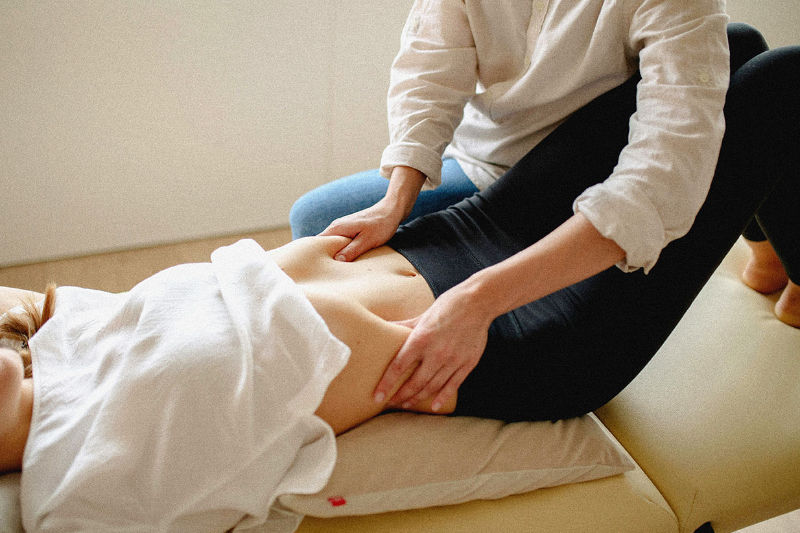
The menstrual massage, which can be done by yourself or with a therapist, is far more than simple relaxation. It affects blood flow, the nervous system, and emotional balance, helping to break the cycle of pain → tension → reduced circulation → more pain. Through this, your body can return to calm and balance.
1. Visceral pain (uterine cramps)
How to recognize it:
This is the classic cramping pain in the lower abdomen that may radiate into the back or thighs. It usually appears in the first days of menstruation and is caused by excessive uterine contractions triggered by too many prostaglandins — hormone-like substances that cause the uterus to contract. When their levels are too high, blood flow decreases, leading to ischemia (a temporary lack of oxygen in the tissue).
What you can do yourself:
You can perform a self-menstrual massage by placing your warm hands on your abdomen and moving them slowly in circular motions while breathing deeply. Warmth — from a heating pad or blanket — helps the uterus relax and improves circulation. Lying on your side with knees drawn up can also reduce pelvic pressure.
What a Bodymind therapist can do:
Through a deep visceral massage, the therapist improves microcirculation and lymphatic drainage in the pelvic area. Combined with diaphragmatic breathing, this stimulates the vagus nerve, which calms the body and restores inner regulation. The result is better oxygenation, fewer cramps, and emotional release.
2. Somatic or reflex pain (muscular and myofascial)
How to recognize it:
This pain feels muscular — a sense of tightness or pressure in the lower back, hips, or pelvis. It occurs because the body responds to internal pain with defensive muscle tension, especially in the back and gluteal muscles. This protective reaction can persist even after menstruation ends.
What you can do yourself:
Try self-massage on your gluteal muscles, hips, and thighs using a natural oil (such as sesame or almond). Gentle circular motions and slow exhalations help the muscles relax. You can also make slow rocking movements with your pelvis while lying down to stimulate natural release and circulation.
What a Bodymind therapist can do:
Using myofascial deep-tissue techniques, the therapist regulates tension sensors in muscles and fascia. Working on gluteal muscles, hip flexors, and adductors indirectly releases the pelvic floor, without touching intimate areas directly.
This gentle method, called joint release, improves posture, breathing, and pelvic mobility. The warm, rhythmic contact stimulates the release of oxytocin and endorphins, the body’s natural pain- and stress-regulating hormones.
3. Neuropathic or functional pain (hypersensitization)
How to recognize it:
This pain is more diffuse and harder to localize. It may persist outside of menstruation and is often accompanied by fatigue, sleep problems, or irritability. The cause is not local but comes from an overactive nervous system that amplifies pain signals — a condition known as central sensitization.
What you can do yourself:
Practice a gentle sensory self-massage, for example on your legs or abdomen, with slow, even strokes. Focus on your breathing and the warmth in your hands. Soft movements, slow walks, gentle yoga, or warm baths calm the nervous system. The key is rhythm: slow, steady, without forcing anything.
What a Bodymind therapist can do:
Through sensory and regulatory massage, using slow, constant touch, the therapist activates special nerve fibers (C-tactile fibers) that send signals of safety and comfort to the brain. In response, the body releases endorphins, oxytocin, and dopamine, which reduce pain perception and improve mood.
The therapist also guides you to reconnect with your body as a safe space and teaches self-regulation techniques you can practice on your own.
4. Endometriosis-related pain (chronic inflammatory pain)
How to recognize it:
This pain is deep, stabbing, and persistent, often on one side, and may occur before or long after menstruation. It can worsen during intercourse or bowel movements and usually does not respond to mild painkillers.
Endometriosis is a chronic inflammatory condition in which tissue similar to the uterine lining grows outside the uterus (e.g., on ovaries, intestines, or peritoneum), causing inflammation and adhesions.
What you can do yourself:
Perform only a very gentle self-massage on the outer pelvic areas or lower back — never deep pressure on the abdomen, as this can irritate sensitive tissue. Warmth, deep breathing, and soft movements like slow yoga can help relieve tension. If the pain is intense or long-lasting, consult your gynecologist.
What a Bodymind therapist can (or cannot) do:
In cases of endometriosis, the therapist does not work directly on the internal pelvic area, because this is a medical condition requiring professional supervision. You should always discuss with your gynecologist whether and where massage might be safe.
A Bodymind therapist can, however, work indirectly through joint-release techniques on the glutes, hip flexors, and adductors, improving posture and pelvic breathing without touching inflamed areas. They can also support emotional and nervous-system regulation, helping reduce stress and overactivation that often amplify chronic pain.
The Integrated Bodymind Approach
In Bodymind Therapy, all four layers — visceral, muscular, neurological, and chronic inflammatory — are considered together.
The menstrual massage, whether done by yourself or with a Bodymind therapist, helps to release physical tension, calm the nervous system, free the pelvic breath, and enhance body awareness. Pain then transforms from an enemy into a message from the body — an invitation to feel, to breathe, and to reconnect with your natural rhythm.
If you’re in Berlin, you can book your Bodymind menstrual massage here ➜ bodymindtherapy.de.If you can’t come in person, check out YouTube tutorials to learn how to practice menstrual self-massage gently, with awareness, warmth, and respect for your own rhythm.
Scientific references:
Proctor M. & Murphy P., Cochrane Database of Systematic Reviews, 2013¹.
Moradi B. et al., Journal of Obstetrics and Gynaecology Research, 2014².
Field T. et al., Pain Research and Management, 2016³.
Hertenstein E. et al., Autonomic Neuroscience, 2019⁴.
Schleip R. & Müller D.G., Frontiers in Physiology, 2013⁵.
Vercellini P. et al., The Lancet, 2022⁶.